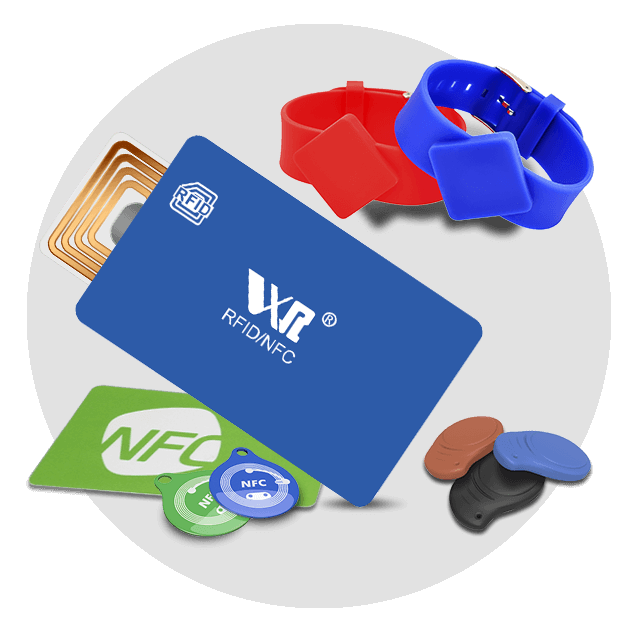
Modern businesses face enormous pressure to keep operations efficient and accurate. Whether you run a logistics company, manage a retail chain, or oversee a manufacturing facility, keeping track of assets is genuinely challenging. That is exactly where RFID tags come in, offering a contactless, fast, and reliable way to identify and monitor virtually anything.
What Makes RFID Tags So Powerful
Radio frequency identification technology uses electromagnetic fields to automatically identify and track tags attached to objects. Unlike traditional barcodes, RFID tags do not require line-of-sight scanning. A reader can detect multiple tags at once, even from a distance, which makes the entire process significantly faster and more scalable for high-volume operations.
The technology works across multiple frequency ranges. Low frequency at 125 kHz is commonly used in access control and animal tracking. High frequency at 13.56 MHz suits library management and smart card systems. Ultra-high frequency from 860 to 960 MHz handles long-range tracking, retail inventory, and supply chain management where speed and distance matter most.
How Industries Are Using Them Every Day
RFID tags have quietly become the backbone of countless industries. Consider these practical applications that are already saving businesses time and money:
- Retail and inventory management: Tags placed on individual items allow instant stock counts without manual scanning, reducing errors and shrinkage significantly
- Access control systems: Employees and visitors carry tagged credentials that grant or deny entry automatically, improving both security and convenience
- Asset tracking: Equipment in hospitals, factories, and warehouses gets tagged so managers always know exactly where everything is located
- Logistics and supply chain: Pallets and shipping containers with tags move through distribution centers while readers capture data without slowing down the flow of goods
- Library management: Books and media items tagged for automatic check-in and check-out reduce staff workload dramatically
Choosing the Right Chip for Your Application
One detail that experienced buyers quickly learn is that not all RFID tags are the same. The chip inside is the heart of the system. Chips like NTAG213, NTAG215, and NTAG216 serve NFC-enabled applications beautifully. Mifare Classic 1K is a popular choice for access control and transport ticketing. For demanding industrial applications requiring long read distances, chips like Alien H3 and Alien H9 are well-regarded options in the UHF category.
Because the chip determines what data can be stored and how the tag communicates, selecting the right one from the start prevents costly changes later. A manufacturer with experience across all chip types can help guide this decision based on your specific system requirements.
Material and Size Matter More Than You Might Think
Beyond the chip, RFID cards and tags come in a wide variety of materials, each suited to different environments. PVC is lightweight and cost-effective for everyday use. ABS plastic and epoxy encapsulations offer greater durability for outdoor or industrial conditions. Waterproof and heat-resistant materials are available for environments that would destroy a standard tag quickly.
Size customization is equally important. Non-standard dimensions allow tags to integrate into products and packaging without disrupting existing designs. Custom shapes, from circular to rectangular to irregular forms, mean the tag fits the application rather than the other way around.
Why Customization Is a Competitive Advantage
Off-the-shelf RFID tags serve basic needs, but custom solutions truly unlock competitive advantages. Full CMYK printing allows companies to add branding, serial numbers, QR codes, and logos directly onto the tag surface. Laser-etched UID printing ensures permanent, precise data that cannot wear away. Pre-programming and memory locking add another layer of security for sensitive applications.
RFID wristbands at events, for example, benefit enormously from customization. Organizers can match brand colors, embed access tier data, and even encode cashless payment credentials all within a single wearable item that attendees barely notice.
The Quality Factor That Separates Good from Great
Quality control is where manufacturers truly differentiate themselves. A batch of tags that fails in the field does not just waste money; it damages the reliability of your entire system and the trust of your clients. The best manufacturers implement 100% testing on every single tag before it leaves the facility, ensuring zero-defect delivery that operations teams can genuinely depend on.
ISO9001 quality management certification and ISO4001 environmental management certification are benchmarks worth verifying when choosing a supplier. These certifications indicate the manufacturer follows rigorous, internationally recognized processes at every stage of production.
Scaling From Prototype to Mass Production
Another practical consideration is a manufacturer's ability to handle both small custom orders and massive production runs. Monthly capacity matters. A facility capable of producing 8 million electronic tags per month can meet urgent bulk demands without compromising quality or lead times. This kind of scale also brings factory-direct pricing that makes large deployments financially viable.
Strategic partnerships with component makers like NXP, Infineon, Atmel, and ISSI mean that chip sourcing is reliable and consistent, even when global supply chains experience pressure.
Conclusion
RFID tags are no longer a future technology reserved for large enterprises. They are an accessible, proven, and scalable solution for businesses of all sizes across nearly every sector. The key to getting them right lies in working with a manufacturer that understands chip selection, material engineering, customization, and quality control at an expert level. When all those pieces align, the technology simply works, and it keeps working reliably for years.